
Cigarettes
Canadian Tobacco Laws Explained for Consumers (2026 Guide)
Jun
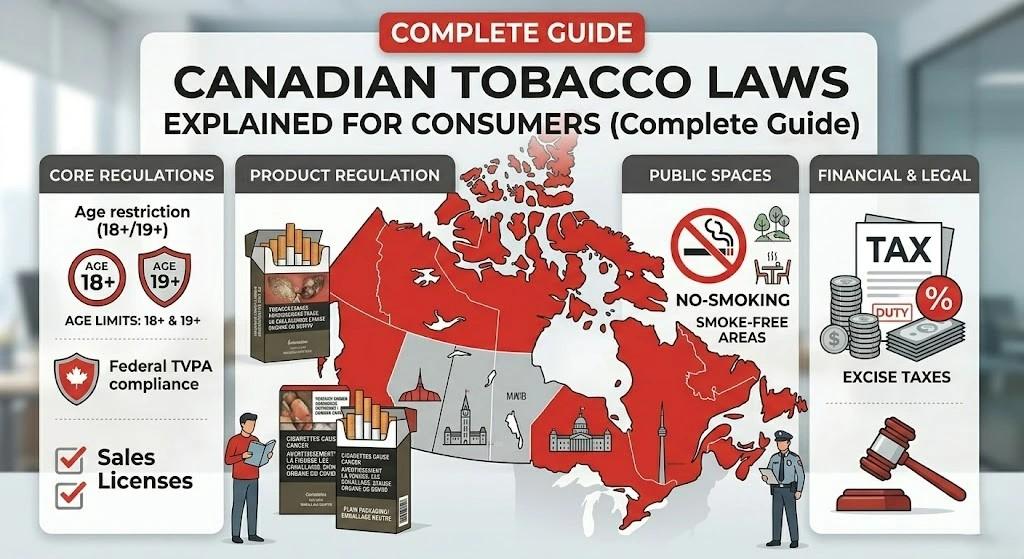
Canadian Tobacco Laws Explained for Consumers to enable them make an informed decision when purchasing tobacco products.
Canadian tobacco laws combine federal, provincial, and territorial regulations. The federal government controls tobacco manufacturing, packaging, labeling, advertising, and product standards. Meanwhile, provinces and territories regulate minimum purchase ages, retail sales practices, public smoking rules, and local enforcement.
As a result, consumers can legally buy tobacco products if they meet the age requirements in their province or territory. However, strict rules govern advertising, packaging, online sales, importation, and where people can smoke.
What Consumers Need to Know in 2026
If you only remember a few things about Canadian tobacco laws, focus on these key points:
- Federal and provincial governments heavily regulate tobacco products.
- Cigarette packages must display large health warnings.
- Health warnings now appear directly on individual cigarettes.
- Tobacco advertising faces strict restrictions.
- Public smoking rules vary across provinces and municipalities.
- Online tobacco purchases require age verification.
- Tobacco taxes significantly increase cigarette prices.
- Provinces can impose additional restrictions beyond federal requirements.
Because regulations can change, consumers should always verify current rules with official government sources.
How Tobacco Is Regulated in Canada
Canada uses a shared regulatory model. Consequently, different levels of government oversee different aspects of tobacco control.
Federal Government Responsibilities
The federal government regulates:
- Tobacco manufacturing standards
- Packaging requirements
- Health warnings
- Product ingredients
- Advertising restrictions
- Product reporting requirements
- Importation rules
Health Canada administers most of these requirements through the Tobacco and Vaping Products Act and related regulations.
As a result, tobacco manufacturers must comply with nationwide standards before selling products in Canada.
Provincial and Territorial Responsibilities
Meanwhile, provinces and territories typically regulate:
- Minimum age requirements
- Retail sales practices
- Licensing requirements
- Smoking in public places
- Workplace smoking restrictions
- Local enforcement measures
Because each province sets its own rules in certain areas, tobacco laws can vary depending on where you live.
For this reason, consumers should always review local regulations before purchasing or using tobacco products.
Federal Tobacco Laws Every Consumer Should Know
The Tobacco and Vaping Products Act
The Tobacco and Vaping Products Act serves as Canada’s primary federal tobacco law.
The legislation aims to:
- Protect young people from tobacco marketing
- Restrict tobacco promotion
- Increase awareness of health risks
- Support broader public health goals
As a result, the Act provides the legal foundation for many tobacco regulations currently in force across Canada.
Advertising Restrictions
Canada enforces some of the world’s strictest tobacco advertising rules.
These restrictions generally apply to:
- Television advertising
- Radio advertising
- Promotional sponsorships
- Lifestyle advertising
- Youth-oriented marketing
Because lawmakers want to reduce tobacco exposure among young people, they severely limit most forms of tobacco promotion.
Consequently, consumers rarely encounter traditional tobacco advertising in Canada.
Tobacco Packaging and Warning Requirements
Plain and Standardized Packaging
Canadian tobacco products must follow strict appearance, packaging, and labeling standards.
Current regulations require:
- Standardized packaging formats
- Prominent health warnings
- Consistent presentation standards
- Limited branding elements
As a result, tobacco companies have far less freedom to differentiate products through packaging design.
At the same time, regulators aim to increase awareness of smoking-related health risks.
Health Warnings on Individual Cigarettes
Canada became the first country to require health warnings directly on individual cigarettes.
The government introduced the changes in stages:
| Date | Requirement |
|---|---|
| 2024 | Warnings added to king-size cigarettes |
| 2025 | Warnings expanded to regular cigarettes and additional tobacco products |
| 2026 | Additional packaging updates continue |
Consequently, many consumers now see warning messages directly on cigarettes in addition to traditional package warnings.
Minimum Legal Age for Tobacco Purchases
The legal age for purchasing tobacco products differs across Canada.
Most provinces currently set the minimum age at:
- 18 years
- 19 years
Meanwhile, some jurisdictions continue evaluating whether higher age requirements would further reduce tobacco use.
Because provincial governments control minimum purchase ages, consumers should verify current requirements in their province or territory.
As a result, age requirements may differ depending on location.
Can You Buy Tobacco Products Online in Canada?
Yes, consumers can buy tobacco products online in some circumstances.
However, retailers must comply with federal and provincial regulations.
In most cases, online sales require:
- Age verification
- Compliance with provincial laws
- Compliance with federal regulations
- Delivery controls and restrictions
A common misconception suggests that online purchases bypass age requirements.
In reality, retailers remain responsible for verifying customer eligibility.
Therefore, consumers should only purchase tobacco products from legitimate retailers that follow Canadian regulations.
Readers interested in online purchases can also review our guide on how to buy cigarettes online in Canada.
Can You Import Tobacco Into Canada?
Consumers can import tobacco products under certain circumstances.
However, customs requirements, duties, taxes, and quantity limits may apply.
Before importing tobacco products, consumers should understand that:
- Duties may apply.
- Taxes may apply.
- Quantity restrictions may apply.
- Reporting requirements may apply.
Because import regulations can change, consumers should verify current requirements before ordering products or traveling internationally.
Consequently, checking official government guidance remains the safest approach.
Why Cigarettes Cost So Much in Canada
Many consumers express surprise when they see cigarette prices in Canada.
Several factors contribute to those costs.
Federal Excise Taxes
The federal government applies excise taxes to tobacco products.
As a result, cigarette prices increase before products even reach retailers.
Provincial Tobacco Taxes
In addition, provinces often impose their own tobacco taxes.
Because tax rates vary between provinces, cigarette prices can differ significantly across the country.
Retail Markups
Retailers also include distribution costs, operating expenses, and profit margins in final pricing.
Consequently, local pricing can vary even within the same province.
Public Health Policy
Governments frequently use tobacco taxation as a public health tool.
By increasing prices, policymakers aim to discourage tobacco consumption.
For this reason, taxes account for a significant portion of cigarette prices.
Readers who want additional details can review current cigarette prices across Canada and learn more about federal and provincial tobacco taxes.
Where Smoking Is Restricted
Public smoking rules differ throughout Canada.
Nevertheless, many restrictions appear consistently across provinces and municipalities.
Common restricted locations include:
- Restaurants
- Bars
- Public buildings
- Schools
- Hospitals
- Workplaces
- Public transit areas
In addition, many municipalities impose extra restrictions that go beyond provincial requirements.
As a result, a person who can legally smoke in one location may face restrictions elsewhere.
Therefore, reviewing provincial smoking restrictions remains important before smoking in public spaces.
Tobacco Promotion and Marketing Restrictions
Many consumers notice that tobacco products rarely appear in advertisements.
That outcome reflects deliberate government policy.
Federal regulations prohibit or heavily restrict:
- Youth-targeted marketing
- Lifestyle advertising
- Promotional giveaways
- Certain sponsorship activities
Because policymakers want to reduce tobacco use among young people, they place significant limits on tobacco marketing.
Consequently, tobacco companies face strict promotional restrictions.
Recent Changes to Canadian Tobacco Laws
Canadian tobacco regulations continue to evolve.
2023
The updated Tobacco Products Appearance, Packaging and Labelling Regulations came into force.
2024
Retailers began selling products featuring updated health warnings and warning messages on king-size cigarettes.
2025
Authorities expanded health warning requirements to additional cigarette formats and tobacco products.
2026
Regulators continue implementing packaging updates, including revised placement requirements for health information messages.
As a result, consumers continue seeing changes to tobacco packaging and warning requirements.
Common Consumer Misunderstandings
“Tobacco Laws Are the Same Everywhere in Canada”
Not necessarily.
Federal laws apply nationwide. However, provinces and municipalities frequently add additional restrictions.
“Online Sales Avoid Age Verification”
No.
Retailers must still verify age and comply with applicable regulations.
“Only Cigarette Packages Need Warnings”
Not anymore.
Canada now requires warnings on many tobacco products and directly on individual cigarettes.
“Tobacco Taxes Are the Same Nationwide”
No.
Because provinces set their own tobacco tax rates, cigarette prices can vary significantly across Canada.
Frequently Asked Questions
What federal law regulates tobacco products in Canada?
The Tobacco and Vaping Products Act serves as the primary federal legislation governing tobacco products in Canada.
Are cigarette packages required to have health warnings?
Yes. Canadian regulations require extensive health warnings and related health information on tobacco packaging.
Why do Canadian cigarettes have warnings printed on them?
Canada introduced warnings on individual cigarettes as part of broader public health initiatives. As a result, consumers now see warning messages both on packages and on many cigarettes.
Can provinces have different tobacco rules?
Yes. Provinces and territories can establish additional rules relating to sales, age requirements, public smoking, and enforcement.
Can tobacco advertising appear on television in Canada?
Canada heavily restricts tobacco advertising. Consequently, consumers rarely encounter traditional tobacco advertisements.
Are tobacco taxes the same across Canada?
No. Provincial tax rates vary, which creates significant price differences between regions.
Can visitors bring tobacco into Canada?
Possibly. However, customs rules, duties, taxes, and quantity limits may apply. Therefore, travelers should verify current requirements before entering Canada.
Key Takeaways: Canadian Tobacco Regulations
- Dual-level regulatory framework: Canada regulates tobacco through a complex combination of both federal and provincial statutes.
- Federal legislative foundation: The Tobacco and Vaping Products Act serves as the primary legislation governing tobacco control nationwide.
- World-leading packaging mandates: Canada enforces some of the strictest standardized packaging and labeling requirements globally.
- Direct-on-product warnings: New regulatory standards now require graphic health warnings to appear directly on individual cigarette sticks.
- Strict marketing prohibitions: Tobacco advertising, sponsorship, and promotional activities face rigorous federal restrictions.
- Localized public smoking laws: Regulations regarding where you can smoke vary significantly by province, territory, and municipality.
- Tax-driven pricing models: Federal and provincial excise taxes are the primary drivers of the final retail price for cigarette products.
- Mandatory online age verification: Licensed online tobacco retailers must strictly adhere to provincial and federal age verification protocols.
- Customs implications for imports: Importing tobacco products from abroad will frequently trigger significant federal customs duties and provincial taxes.
- Regional regulatory variance: Consumers must verify local ordinances, as provincial and municipal regulations can differ substantially from federal standards.
Related Resources
- Can You Buy Menthol Cigarettes in Canada?
- Can You Buy Cigarettes Online in Canada?
- How Much Do Cigarettes Cost in Canada?
- Canadian Tobacco Tax Guide
- Smoking Laws by Province in Canada
Sources & References
- Health Canada – Tobacco Products Regulations Referenced for information on Canada’s federal tobacco regulatory framework. https://www.canada.ca/en/health-canada/services/health-concerns/tobacco/legislation/federal-laws/tobacco-act.html
- Health Canada – Tobacco Products Appearance, Packaging and Labelling RegulationsReferenced for packaging requirements, warning labels, and implementation timelines. https://www.canada.ca/en/health-canada/services/smoking-tobacco/regulating-tobacco-vaping/tobacco-products-information-regulations.html
- Health Canada – Facts About Tobacco Packaging RegulationsReferenced for health warning implementation schedules and regulatory updates. https://www.canada.ca/en/health-canada/services/smoking-tobacco/regulating-tobacco-vaping/tobacco/tobacco-regulations-facts.html
- Health Canada – TPAPLR OverviewReferenced for current packaging, appearance, and labeling requirements. https://www.canada.ca/en/health-canada/services/smoking-tobacco/regulating-tobacco-vaping/tobacco/appearance-packaging-labelling.html
Last Updated: June 2026
Since tobacco laws continue to evolve, consumers should consult official federal, provincial, and territorial resources for the most current information regarding tobacco sales, advertising, importation, and public smoking regulations.