
Cigarettes
Why Cigarette Prices Vary Across Canada (2026 Guide)
Jun
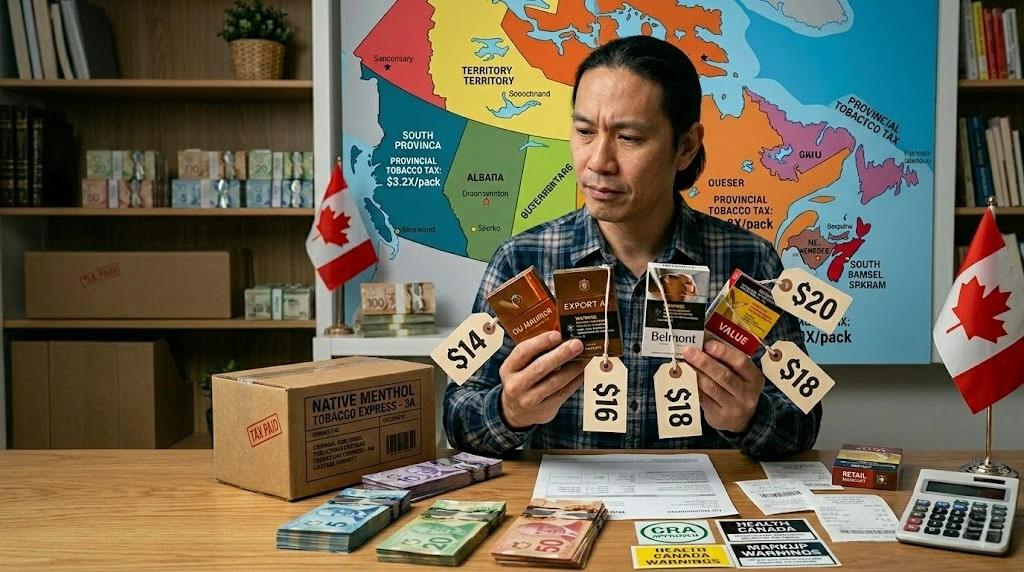
Why do cigarette prices vary across Canada? Cigarette prices vary across Canada because provinces set their own tobacco tax rates in addition to federal excise duties, sales taxes, and retailer markups. Transportation costs, regulatory requirements, inflation, and brand pricing strategies also affect retail prices. As a result, smokers often pay significantly different prices for the same cigarette brand depending on the province where they make their purchase.
Why Do Cigarette Prices Vary Across Canada?
Short answer: taxes are the biggest reason.
Cigarette prices vary across Canada primarily because each province sets its own tobacco tax rates in addition to federal excise duties, sales taxes, retailer markups, and distribution costs. As a result, the same cigarette brand can cost significantly more in one province than another.
Provincial tobacco taxes account for most of the price differences smokers notice across Canada. Transportation costs, local regulations, inflation, and brand positioning also influence the final price consumers pay.
Many smokers notice substantial price differences when travelling between provinces.
A carton purchased in Alberta often costs significantly less than the same carton purchased in British Columbia, Nova Scotia, or Newfoundland and Labrador.
These price differences are not random.
Several factors influence cigarette pricing across Canada:
- Federal tobacco excise duties
- Provincial tobacco taxes
- GST, PST, and HST
- Retail operating costs
- Transportation expenses
- Brand pricing strategies
- Government regulations
- Inflation
While all of these factors affect pricing, taxation remains the largest contributor.
Which Province Has the Cheapest Cigarettes in Canada?
This is one of the most commonly searched questions related to cigarette prices.
Although prices change regularly because of tax increases and inflation adjustments, several provinces have historically maintained lower cigarette prices than the national average.
Provinces Often Considered Lower-Priced
- Alberta
- Quebec
- Saskatchewan
- Manitoba
Smokers in these provinces generally benefit from lower provincial tobacco taxes compared with smokers living in many other parts of Canada.
That does not mean cigarettes are inexpensive. Tobacco taxes remain substantial nationwide. Even so, smokers frequently notice meaningful savings compared with higher-tax provinces.
Why These Provinces Tend to Be Less Expensive
Several factors contribute:
- Lower provincial tobacco taxes
- Different taxation structures
- Competitive retail markets
- Lower operating expenses
- Lower distribution costs
Prices still vary between cities, retailers, and brands, but these provinces often remain among the more affordable regions for legal cigarette purchases.
Which Province Has the Most Expensive Cigarettes in Canada?
Several provinces consistently rank among the most expensive places to buy cigarettes.
Provinces Often Considered Higher-Priced
- British Columbia
- Nova Scotia
- Newfoundland and Labrador
- Prince Edward Island
These provinces generally impose higher tobacco taxes, which directly increases retail prices.
Northern Territories Often Cost Even More
Smokers in northern Canada frequently face the highest cigarette prices in the country.
This includes:
- Yukon
- Northwest Territories
- Nunavut
Long transportation routes and higher freight costs contribute significantly to these higher prices.
Why Prices Are Higher
Several factors contribute:
- Higher tobacco taxes
- Transportation expenses
- Stronger tobacco-control policies
- Distribution challenges
- Higher retailer operating costs
For smokers who purchase cigarettes regularly, these differences can add up quickly over the course of a year.
Average Cigarette Carton Prices by Province (2026)
Although cigarette prices fluctuate throughout the year because of tax adjustments, inflation, and retailer pricing decisions, the following ranges provide a realistic estimate of legal cigarette carton prices across Canada in 2026.
Estimated Carton Price Ranges by Province
| Province/Territory | Estimated Carton Price Range (CAD) |
|---|---|
| Alberta | $140–$180 |
| Saskatchewan | $145–$185 |
| Manitoba | $145–$190 |
| Quebec | $140–$190 |
| Ontario | $160–$210 |
| New Brunswick | $170–$220 |
| Prince Edward Island | $180–$230 |
| Nova Scotia | $180–$240 |
| Newfoundland and Labrador | $185–$250 |
| British Columbia | $180–$240 |
| Yukon | $190–$250+ |
| Northwest Territories | $200–$260+ |
| Nunavut | $220–$300+ |
These figures represent general retail ranges for legal cigarette products and may vary depending on:
- Brand selection
- Retailer pricing
- Local taxes
- Distribution costs
- Product category
- Promotional pricing
Premium cigarette brands generally fall toward the upper end of these ranges, while value brands often sell closer to the lower end.
Provincial Price Trends at a Glance
Several patterns become apparent when comparing cigarette prices across Canada.
Generally Lower-Priced Provinces
- Alberta
- Quebec
- Saskatchewan
- Manitoba
Mid-Range Provinces
- Ontario
- New Brunswick
Generally Higher-Priced Provinces
- British Columbia
- Nova Scotia
- Prince Edward Island
- Newfoundland and Labrador
Highest-Priced Regions
- Yukon
- Northwest Territories
- Nunavut
Northern territories often experience the highest cigarette prices because retailers face substantially higher transportation and distribution expenses.
Why Exact Prices Vary
Unlike products with nationally regulated pricing, cigarette prices can vary considerably between retailers.
Several factors influence shelf prices:
- Provincial tobacco taxes
- Federal excise duties
- GST, PST, and HST
- Retail operating expenses
- Transportation costs
- Manufacturer pricing decisions
As a result, smokers purchasing the same cigarette brand in different provinces often pay noticeably different prices.
What Is the Average Price of a Pack of Cigarettes in Canada?
Many consumers searching for cigarette prices simply want to know what a typical pack costs.
In 2026, a legal pack of cigarettes in Canada generally costs between $14 and $25 depending on:
- Province
- Brand
- Retailer
- Applicable taxes
Premium Brands
Premium cigarette brands typically occupy the higher end of the price range because manufacturers position them as premium products.
Value Brands
Value brands generally cost less and appeal to smokers looking for lower-priced alternatives.
Why Pack Prices Differ
Pack prices vary because:
- Tobacco taxes differ by province
- Retailers apply different markups
- Transportation costs vary
- Local competition affects pricing
This explains why smokers frequently notice different prices while travelling across Canada.
What Is the Average Cost of a Carton of Cigarettes in Canada?
A standard carton typically contains:
- 10 packs
- 200 cigarettes
Across Canada, legal cigarette cartons generally range from $140 to $250, although prices in some northern communities can exceed $300 per carton.
Why Carton Prices Matter
Many smokers purchase cartons instead of individual packs because carton pricing makes long-term costs easier to evaluate.
For example, a $2 difference per pack becomes a $20 difference per carton.
For daily smokers purchasing multiple cartons each month, those differences become substantial over time.
Factors That Affect Carton Prices
Several variables influence carton pricing:
- Provincial tobacco taxes
- Federal excise duties
- Sales taxes
- Brand positioning
- Transportation costs
- Retail markups
Because these factors vary across Canada, carton prices vary as well. Discover How Much Do Cigarettes Cost in Canada.
Do Cigarette Prices Differ Between Cities and Rural Areas?
Yes.
Many smokers assume cigarette prices remain consistent throughout a province.
In reality, prices often vary between urban centres and rural communities.
Cigarette Prices in Cities
Urban areas often benefit from:
- Greater retail competition
- Larger customer bases
- More efficient supply chains
- Faster inventory turnover
These advantages help stabilize pricing.
Cigarette Prices in Rural Areas
Rural communities often face:
- Higher delivery costs
- Reduced competition
- Smaller customer populations
- Higher logistics expenses
As a result, cigarette prices can be slightly higher than those found in major cities.
Regional Differences Matter
Even within the same province, smokers may encounter different prices depending on where they shop.
A carton purchased in a major urban centre may cost less than the same carton purchased in a remote community several hours away.
How Much Do Cigarette Taxes Affect Prices?
Taxes represent the single largest component of cigarette pricing in Canada.
In many provinces, taxes account for a substantial percentage of the final retail price.
These taxes include:
- Federal tobacco excise duties
- Provincial tobacco taxes
- GST
- PST
- HST
Without these taxes, cigarettes would cost significantly less.
Why Governments Tax Tobacco
Governments use tobacco taxes for several reasons:
- To discourage smoking
- To reduce youth tobacco use
- To generate public revenue
- To offset healthcare costs associated with smoking
Because provincial tax policies differ, cigarette prices differ as well.
The Four Main Factors That Determine Cigarette Prices
While taxes are the biggest driver of cigarette prices in Canada, they are not the only factor. Several elements work together to determine the final price consumers see at the counter.
1. Federal Tobacco Excise Duty
Every legal cigarette sold in Canada is subject to federal excise duty.
This nationwide tax forms part of the base price of tobacco products before provincial taxes are added.
The federal government periodically adjusts tobacco duties in response to inflation, fiscal policy, and public-health objectives.
Because every smoker pays federal excise duty regardless of location, this cost affects cigarette prices throughout Canada.
2. Provincial Tobacco Taxes
Provincial tobacco taxes are the primary reason cigarette prices differ between provinces.
Each province establishes its own tobacco tax structure and rates.
Provinces with higher tobacco taxes generally have higher cigarette prices, while provinces with lower tobacco taxes often have lower retail prices.
This explains why the same carton frequently costs substantially more in British Columbia than in Alberta or Quebec.
3. Sales Taxes
Sales taxes further increase cigarette prices.
Depending on the province, consumers may pay:
- GST
- PST
- HST
Although sales taxes are not unique to tobacco products, they still contribute to noticeable price differences across Canada.
4. Retail Markups and Operating Costs
Retailers must cover operating expenses before earning a profit.
These expenses include:
- Rent
- Employee wages
- Utilities
- Insurance
- Inventory costs
- Distribution expenses
As operating costs rise, retailers often adjust pricing accordingly.
This means cigarette prices can vary even between stores located within the same city.
Quick Comparison: What Affects Cigarette Prices?
The following table shows how various factors influence cigarette pricing across Canada.
| Factor | Applies Across Canada? | Impact on Price |
|---|---|---|
| Federal Excise Duty | Yes | High |
| Provincial Tobacco Tax | No | Very High |
| GST/HST/PST | Varies | Moderate |
| Retail Markup | Varies | Moderate |
| Transportation Costs | Varies | Moderate |
| Brand Positioning | Varies | Moderate |
| Regulatory Compliance Costs | Yes | Low to Moderate |
| Inflation | Yes | Moderate |
Provincial tobacco taxes remain the largest contributor to price differences between provinces.
Federal Taxes vs Provincial Taxes
Understanding the difference between federal and provincial taxation helps explain why cigarette prices vary so much across Canada.
Federal Tobacco Taxes
The federal government applies excise duties to tobacco products sold throughout Canada.
These duties apply nationwide and form part of the base cost of every legal cigarette product.
Every smoker pays federal tobacco taxes regardless of province.
Provincial Tobacco Taxes
Provincial governments set their own tobacco tax rates.
As a result, cigarette prices differ substantially across Canada.
A smoker purchasing a carton in Alberta often pays significantly less provincial tobacco tax than a smoker purchasing the same carton in British Columbia or Nova Scotia.
Sales Taxes Also Affect Pricing
Consumers may also pay:
- GST
- PST
- HST
These taxes increase the final amount paid at checkout and vary by province.
Why Provincial Tobacco Taxes Matter So Much
Provincial tobacco taxes explain most of the price differences smokers notice when travelling across Canada.
Unlike federal excise duties, which remain consistent nationwide, provincial tobacco taxes vary significantly.
As a result, two smokers purchasing the exact same brand can pay very different prices.
Why Provinces Tax Tobacco
Provincial governments use tobacco taxes to:
- Generate revenue
- Support public-health initiatives
- Reduce smoking rates
- Offset healthcare expenditures
Because provinces pursue different policy objectives, tobacco tax rates differ.
Real-World Example
Imagine two smokers purchasing the same premium cigarette carton.
Smoker A
- Lives in Alberta
- Purchases from a major retailer
- Benefits from lower provincial tobacco taxes
Smoker B
- Lives in British Columbia
- Purchases the same brand
- Pays higher provincial tobacco taxes
Although both smokers purchase the identical product, Smoker B often pays substantially more.
This example demonstrates why provincial taxation remains the biggest factor affecting cigarette prices across Canada.
Why Are Cigarettes So Expensive in Canada?
Many smokers compare Canadian cigarette prices with prices in other countries and wonder why tobacco products cost so much.
The answer involves taxation, regulation, inflation, and operating expenses.
Public Health Policies
Canadian governments use pricing as part of broader tobacco-control strategies.
Higher cigarette prices are intended to discourage smoking and reduce tobacco consumption.
Multiple Layers of Taxation
Consumers pay several layers of taxes on tobacco products, including:
- Federal excise duties
- Provincial tobacco taxes
- GST
- PST
- HST
These taxes often represent a large portion of the final retail price.
Regulatory Requirements
Manufacturers and retailers must comply with strict regulations covering:
- Packaging
- Health warnings
- Product standards
- Distribution requirements
Compliance creates additional costs that affect retail pricing.
Rising Operating Costs
Retailers and distributors continue facing higher costs related to:
- Labour
- Transportation
- Fuel
- Warehousing
- Insurance
As costs increase throughout the supply chain, cigarette prices increase as well.
Transportation and Distribution Costs
Taxes explain most pricing differences, but transportation costs also play an important role.
Getting tobacco products from manufacturers to retailers involves multiple stages, including:
- Warehousing
- Freight transportation
- Distribution centres
- Local delivery networks
- Inventory management
These costs vary considerably depending on geography.
Why Northern Regions Often Pay More
Residents of northern Canada often face higher cigarette prices because products must travel longer distances.
Examples include:
- Nunavut
- Yukon
- Northwest Territories
Retailers in these regions often rely on more expensive transportation methods, increasing distribution expenses.
Rural Communities Face Additional Costs
Many rural communities experience higher tobacco prices because:
- Fewer retailers operate locally
- Transportation routes are longer
- Delivery volumes are smaller
- Inventory turnover is slower
As a result, smokers living in remote areas frequently pay more than smokers living in major urban centres.
How Cigarette Brands Affect Pricing
Not all cigarette brands are priced equally.
Brand positioning plays a major role in determining retail prices.
Premium Brands
Premium brands generally command higher prices because of:
- Brand recognition
- Consumer loyalty
- Product positioning
- Historical reputation
Manufacturers market these brands as premium products, allowing them to charge more.
Value Brands
Value brands focus primarily on affordability.
These products compete by offering lower prices while still meeting regulatory requirements.
Popular Cigarette Brands in Canada
Examples include:
- Du Maurier
- Belmont
- Canadian Classics
- Player’s
- Export A
Even within the same retailer, premium and value brands can differ significantly in price.
Why Indigenous Tobacco Products Sometimes Cost Less
Many Canadians notice that some Indigenous tobacco products appear less expensive than mainstream cigarette brands.
This topic often creates confusion because pricing depends on several legal, regulatory, and tax-related factors.
Potential influences include:
- Tax treatment
- Jurisdiction-specific regulations
- Distribution methods
- Location of sale
- Eligibility requirements
The legal framework surrounding Indigenous tobacco products is complex and varies across Canada.
Consumers should avoid assuming that all Indigenous tobacco products are automatically exempt from taxation or regulations.
Because the rules differ across jurisdictions, buyers should review applicable laws before making purchasing decisions.
The Impact of Tobacco Regulations
Canada maintains some of the world’s strictest tobacco regulations.
Although taxes remain the largest pricing factor, regulations also contribute to overall costs.
Plain Packaging Requirements
Manufacturers must comply with plain packaging standards that affect:
- Package design
- Printing requirements
- Production processes
- Brand presentation
These requirements increase manufacturing and compliance expenses.
Health Warning Labels
Canadian tobacco products carry extensive health warnings.
Manufacturers must incorporate these warnings into every compliant package sold in Canada.
The cost of implementing and updating these requirements becomes part of the overall product cost.
Manufacturing Compliance
Tobacco companies must comply with ongoing regulatory requirements involving:
- Product standards
- Reporting obligations
- Packaging regulations
- Distribution controls
These compliance costs eventually flow through the supply chain and contribute to retail pricing.
Retail Licensing and Compliance
Retailers also face regulatory obligations, including:
- Licensing requirements
- Age-verification obligations
- Product display restrictions
- Sales compliance procedures
Although these costs are smaller than tobacco taxes, they still contribute to overall cigarette prices.
Historical Timeline: Why Cigarette Prices Keep Rising
Cigarette prices have increased steadily over the past several decades.
Several developments have contributed to this trend.
| Period | Major Development |
|---|---|
| Early 2000s | Gradual tobacco tax increases |
| 2010s | Expanded tobacco-control policies |
| 2017–2018 | Additional regulatory restrictions |
| 2019–2020 | Plain packaging implementation |
| 2021–2025 | Inflation and repeated tax increases |
| 2026 | Continued excise-duty and provincial tax adjustments |
This timeline shows that cigarette prices have risen because of multiple factors rather than a single policy change.
Inflation Also Plays a Role
Many smokers focus entirely on tobacco taxes when discussing cigarette prices.
Inflation also contributes significantly.
Like other consumer products, cigarettes are affected by increases in:
- Manufacturing expenses
- Transportation costs
- Labour costs
- Packaging costs
- Fuel prices
- Warehousing expenses
Even if tobacco taxes remained unchanged, inflation would still place upward pressure on cigarette prices.
When inflation and tax increases occur simultaneously, smokers often experience larger price increases.
Common Misconceptions About Cigarette Prices
Several myths continue circulating among smokers.
Understanding the facts helps explain why cigarette prices vary across Canada.
Myth #1: All Cigarettes Cost the Same Across Canada
False.
Provincial tobacco taxes create significant regional price differences.
The same brand can cost substantially more in one province than another.
Myth #2: Taxes Are the Only Reason Prices Change
False.
Taxes are the largest factor, but transportation costs, retailer expenses, inflation, regulations, and brand positioning also affect pricing.
Myth #3: The Same Brand Always Costs the Same
False.
The exact same cigarette brand can have different prices depending on:
- Province
- City
- Retailer
- Local tax structure
Myth #4: Premium Brands Cost the Same as Value Brands
False.
Premium brands generally carry higher prices because of their market positioning and consumer demand.
Myth #5: Inflation Is the Main Driver of Rising Prices
False.
Inflation contributes to higher prices, but tobacco taxes typically have a larger impact on cigarette pricing in Canada.
Real-World Example
Consider two smokers purchasing the same premium cigarette brand.
Smoker A
- Lives in Alberta
- Buys from a major retailer
- Benefits from lower provincial tobacco taxes
Smoker B
- Lives in British Columbia
- Purchases the same brand
- Faces higher provincial tobacco taxes
Although both smokers purchase the identical product, Smoker B often pays substantially more.
The difference comes primarily from taxation rather than product quality.
This example illustrates why cigarette prices vary so dramatically across Canada.
What Will Happen to Cigarette Prices in the Future?
Several trends suggest cigarette prices will continue increasing over time.
Future Tobacco Tax Increases
Governments regularly review tobacco taxation policies. Additional tax increases remain likely in many provinces.
Continued Inflation
Rising costs throughout the economy continue affecting cigarette production and distribution.
Public Health Initiatives
Many tobacco-control programs rely on higher pricing to discourage smoking. As a result, governments often view taxation as a public-health tool.
Additional Regulatory Changes
Future regulations may create additional compliance costs for manufacturers and retailers.
Transportation Cost Increases
Higher fuel and logistics expenses may further increase cigarette prices, particularly in rural and northern communities. While the exact pace of future increases remains uncertain, long-term upward pressure on cigarette prices appears likely.
Frequently Asked Questions
Why are cigarettes more expensive in some provinces?
Different provincial tobacco tax rates are the primary reason. Provinces with higher tobacco taxes generally have higher cigarette prices.
Which province generally has the cheapest cigarettes?
Historically, Alberta, Quebec, Saskatchewan, and Manitoba have often ranked among the lower-priced provinces.
Which province generally has the most expensive cigarettes?
British Columbia, Newfoundland and Labrador, Nova Scotia, and the northern territories frequently rank among the most expensive.
Do all cigarette brands cost the same?
No. Premium brands generally cost more than value brands because of brand positioning and market demand.
Are taxes the biggest factor in cigarette prices?
Yes. Federal and provincial tobacco taxes are typically the largest contributors to cigarette pricing in Canada.
Why are cigarettes expensive in northern Canada?
Transportation and distribution costs are significantly higher in many northern communities.
Does inflation affect cigarette prices?
Yes. Rising costs throughout the supply chain contribute to higher cigarette prices over time.
Will cigarette prices continue rising?
Current trends suggest future tax increases, inflation, and regulatory changes will continue placing upward pressure on cigarette prices.
Key Takeaways
- Provincial tobacco taxes are the biggest reason cigarette prices vary across Canada.
- Federal excise duties apply nationwide, while provincial taxes differ significantly.
- Alberta, Quebec, Saskatchewan, and Manitoba often have lower cigarette prices than many other provinces.
- British Columbia and several Atlantic provinces frequently have higher prices.
- Taxes account for a substantial portion of the final retail price.
- Transportation costs contribute to higher prices in northern and remote communities.
- Premium cigarette brands generally cost more than value brands.
- Tobacco regulations add compliance costs throughout the supply chain.
- Inflation contributes to ongoing cigarette price increases.
- Future tax increases and regulatory changes may continue pushing prices higher.
Related Resources
- How Much Do Cigarettes Cost in Canada?
- Top Cigarette Brands in Canada
- Is It Legal to Buy Cigarettes Online in Canada?
- Can You Buy Menthol Cigarettes in Canada?
- Canadian Tobacco Laws Explained
Sources & References
- Health Canada – Tobacco Legislation and Regulations
https://www.canada.ca/en/health-canada/services/smoking-tobacco/legislation.html - Government of Canada – Tobacco and Vaping Products Act
https://www.canada.ca/en/health-canada/services/smoking-tobacco/vaping/tobacco-vaping-products-act.html - Government of Canada – Excise Duty Rates on Tobacco Products
https://www.canada.ca/en/revenue-agency/services/forms-publications/publications/edn32/excise-duty-rates.html - Statistics Canada – Consumer Price Index Data
https://www.statcan.gc.ca - Canadian Cancer Society – Tobacco Taxation and Tobacco Control Policies
https://cancer.ca - Conference Board of Canada – Inflation and Consumer Pricing Trends
https://www.conferenceboard.ca
Last Updated: June 2026
Cigarette prices change regularly due to tax adjustments, inflation, retailer pricing decisions, and provincial policy updates. Readers reading our blog titled: “Why do cigarette prices vary across Canada?” should consult official government resources and local retailers for the most current pricing information.